Oxygen sensors are made of reactive materials which limits their lifespan. Aside from mechanical failures such as shorted heating elements or physical damage, these sensors will usually last around 80,000 miles. If an engine has a mechanical failure such as a head gasket (coolant) or an issue that causes oil consumption (rings, valve guides), it will drastically shorten the sensor's life.
When replacing your oxygen sensor, be sure to use a high-quality OEM (Original Equipment Manufacturer) part. Cheaper sensors aren't as accurate and don’t last as long as an OEM sensor will, and can cause performance issues as well as emissions problems. Vacuum leaks in the intake system, can give a false the sensor false readings and cause poor engine performance.
History
As fuel injection evolved, so did the oxygen sensor. Evolving from a one-wire sensor that grounded through the outer case, to a four-wire sensor that grounds externally and a built in heater help the sensor perform properly when cold. Oxygen sensors have been designed to measure the efficiency of the catalytic converter. By placing an oxygen sensor in the exhaust system in front (Primary or upstream) of the converter and one behind it (secondary or downstream) the computer can see if the converter is reducing emissions as designed while it is adjusting for optimum performance. Early systems would use just one primary sensor and adjust the entire engine based on that reading, whereas newer fuel injection systems use up to four sensors to optimize the fuel delivery system.
SPONSORED LINKS
Let's Jump In!
An oxygen sensor is an electronic component that is designed to measure levels
of oxygen in an automotive engine exhaust system.
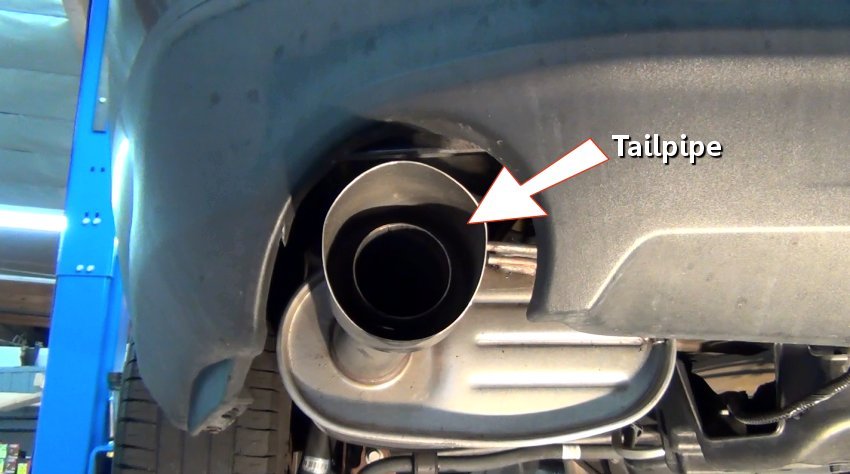
Typically, the oxygen sensor is mounted to the exhaust system tube or on the
side of a catalytic converter, with the sensor part inside the tube. This measures
the oxygen mixture by generating a small amount of electricity due to the difference
in atmosphere, oxygen and carbon dioxide. The computer PCM monitors this voltage
and adjusts fuel delivery accordingly. Oxygen sensors can usually be found in the
exhaust pipe near the engine (primary sensor) although sometimes they are mounted
in the exhaust manifold itself where the exhaust pipe connects. Sensors found after
or on the catalytic converter is the secondary unit.
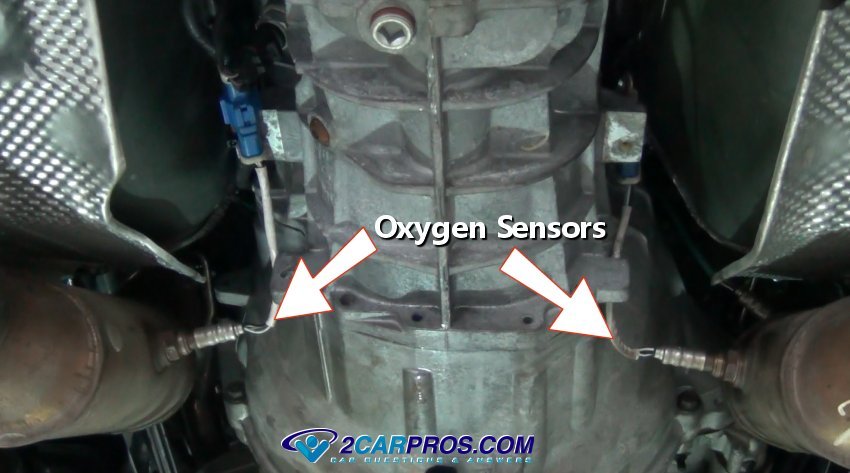
The sensor's job is to measure the amount of oxygen required to burn any fuel
remaining in the exhaust stream and relay that information back to the computer
PCM (Powertrain Control Module) where it is compared with other live information
so that adjustments can be made to maximize fuel efficiency and power via proper
air-fuel mixture and ignition timing in the engine. Oxygen sensors do this through
a chemical reaction inside the sensor itself; in this article we will explain the
evolution and application of this very important piece of the fuel injection puzzle.
Oxygen sensors work through a chemical reaction. The core or element of the sensor
is Zirconia ceramic with a thin layer of platinum. Since these materials are reactive
and are applied as layers they will eventually wear out reducing their efficiency.

The voltage created by the sensor is then relayed to the computer where it will
compare it with other live information to make the necessary mixture and timing
adjustments. The oxygen sensor is in continuous communication with the engine control
unit giving it the information necessary to adjust fuel delivery for optimum combustion.

When the engine is cold the oxygen sensor reads slowly, a heating element has
been installed to correct this problem and help the sensor operate correctly until
the engine has reached operating temperature. When these heaters fail it will cause
the check engine lamp to illuminate. The number of secondary sensors will depend
on how many catalytic converters the vehicle has. Oxygen sensors use a cycling of
rich to lean mixtures to achieve a balance close to a stoichiometric mixture (ideal
for internal combustion).

SPONSORED LINKS
Questions?
Our certified technicians are ready to answer oxygen sensor questions for free. We hope you saved money and learned from this guide. We are creating a full set of car repair guides. Please subscribe to our 2CarPros YouTube channel and check back often for new videos which are uploaded regularly.
Article published 2022-03-10
SPONSORED LINKS

Oxygen Sensor Replacement Dodge
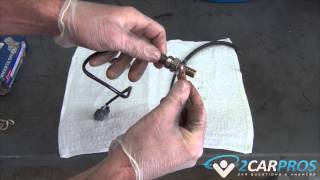
Oxygen Sensor Replacement