Logo Automobile Information Add Site to Favorites  
Auto Repair
Auto Repair Home
Auto Repair Ask a Car Repair Question
Auto Repair Car Question Forum
Auto Repair Questions by Manufacturer
Auto Repair Questions by Topic
Auto Repair First Things to Check
Auto Repair How to Repair or Service
Auto Repair Car Repair Manuals
Auto Repair How Does it Work
Auto Repair Car Repair Video Series
Auto Repair Auto Maintenance
Auto Repair Car Sound Problems
Auto Repair Auto Term Abbreviations


Popular Site Links


Auto Repair Automobile Safety Inspection
Auto Repair Brake Replacement Guides
Auto Repair Service Engine Soon Light
Auto Repair Belt Routing Diagrams
Auto Repair Avoid Car Repair Rip Offs
Auto Repair Trouble Code Table
Auto Repair How to use Diagnostic Tools
Auto Repair Smog Test Preparation
Auto Repair Hybrid Car Information
Auto Repair Test Equipment Store
Auto Repair Auto Parts
 
Search Website
 
 
Recent Repair Topics


Auto Repair1999 Dodge Truck Engine...
Auto Repair1999 Chrysler Concorde ...
Auto Repair2001 Dodge Caravan No S...
Auto Repair1995 Ford F350 Starter ...
Auto Repair1996 Infiniti I30 Alter...
Auto Repair2001 Volkswagen Jetta Maf
Auto Repair1990 Honda Civic
Auto Repair More Repair Topics...


Free Auto Repair Advice by Professional Mechanics


Troubleshooting / Why Does My Engine Idle to low?

Why Does My Engine Idle Low?

Introduction

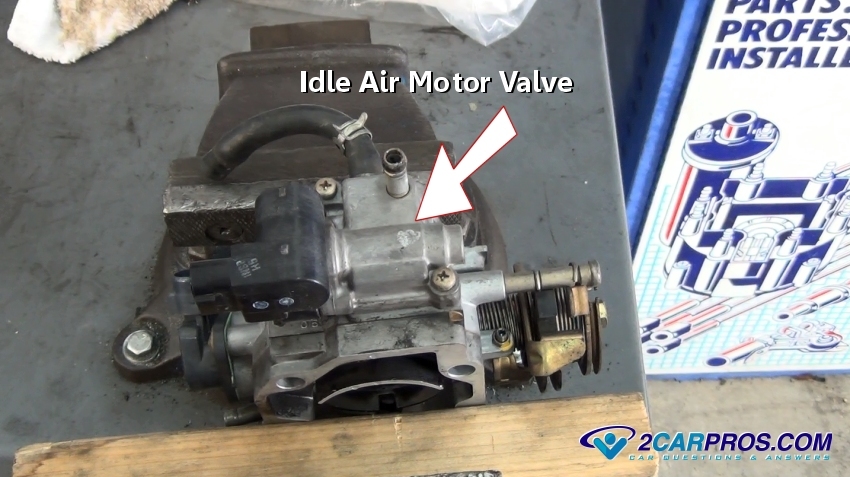
An engine's idle condition is important for proper vehicle operation. A fuel injected engine's idle speed is controlled by the IAC motor. This motor controls a plunger or valve that opens and closes a vacuum port in turn controlling the engine idle speed. But there are conditions where the IAC motor cannot control the engine idle speed. If your engine is idling low with excessive smoke coming out of the exhaust system please visit. Why is black smoke coming out of the exhaust? If the exhaust seems normal proceed with the instruction below:

 Car Repair Guide - READ COMPLETELY BEFORE BEGINNING!

  • Step 1 - Anytime you have a problem with electronically controlled components such as an engine, transmission, ABS brake, or SRS (supplemental restraint system, Air Bag) inspect all fuses using a test light. Check the under hood power distribution center and under dash fuse panels. If all fuses test ok continue to the next step. How do I check my car fuses?
     
  • Step 2 - There are two types of low idle conditions, computer controlled and non-computer controlled malfunctions. To check for problems with electronically controlled components such as an engine, transmission, ABS brake, or SRS (supplemental restraint system, air bag) after the fuses have been tested a trouble code scan tool is needed to identify system troubles. Use a simple scanner tool to retrieve trouble codes and to check if they relate to the specific problem, like an IAC motor failure code. If a trouble code is present but does not pertain to the immediate problem like an EVAP code, ignore it until a later time, after the engine is running properly. The reason we repair non-related codes after the engine is running properly is because sometime false codes can be triggered by a malfunctioning engine. Once the engine is running properly the code might cycle, and turn itself off. If no trouble codes are present proceed to the next step. How do I scan my service engine soon light?
     
    Get the Free Flash Player to see this video.

    How to Scan for Trouble Codes Video

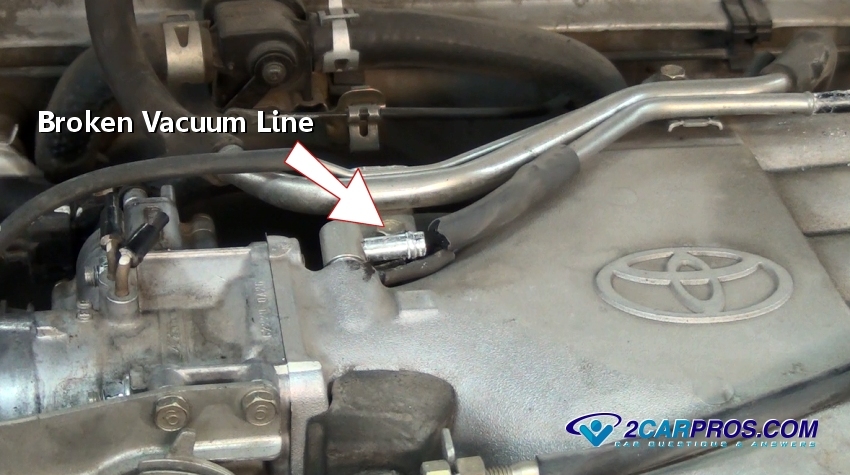
  • Step 3 - Your engine designed to operate with a prescribed amount of vacuum. If a large amount of vacuum is allowed to leak it can cause a low idle condition. Check for broken or dilapidated vacuum hoses on and around the engine. Your car's engine is designed to run on a system that can hold vacuum. Vacuum hose are typically connected to the engine intake manifold or throttle body and will supply engine vacuum to various accessories like power brakes and cruise control. Some manufactures like Ford are designed with a larger vacuum transfer hose that connects the intake manifold to the IAC (idle air control) motor. If broken or dilapidated vacuum line or air intake boot can cause the engine to lose vacuum which will allow the engine to idle high. Inspect all engine and accessory vacuum lines to look for missing, torn or dilapidated lines and replace as needed. Also start the engine and while the engine is running listen for any whistling noise coming from the engine that is not usually present. Follow the noise and inspect vacuum lines in that area. When the engine is running it will pull a broken piece of the hose inward to create a larger vacuum leak. Check the integrity of all vacuum hoses at each end of the hose, typically this is where a vacuum hose fails. If all vacuum hoses check "ok" proceed to the next step.

    Air Intake Boot
    Failed Air Intake Boot

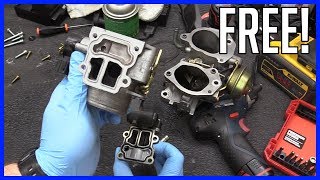
  • Step 4 - An IAC (idle air control) motor is designed to adjust the engine idle RPM speed by opening and closing an air bypass passage inside the throttle body. An IAC motor can fail one of two ways; either the motor short circuits and stops working or the motor will develop high resistance and cause the IAC control motor to react slowly. Either failure can cause the engine to operate at a low idle. When a trouble code scan is performed it sometimes won't always detect a failed or weak IAC motor. To check the IAC motor remove the unit. With the wires connected turn the key to the "on" position without starting the engine. The IAC should move in or out. If the IAC motor does nothing it has probably failed. Replace it with a new unit and recheck system. Note: while the IAC motor is removed clean (use aerosol carburetor cleaner) the passages the IAC uses to control idle air speed. If the IAC valve checks "ok" proceed to the next step.

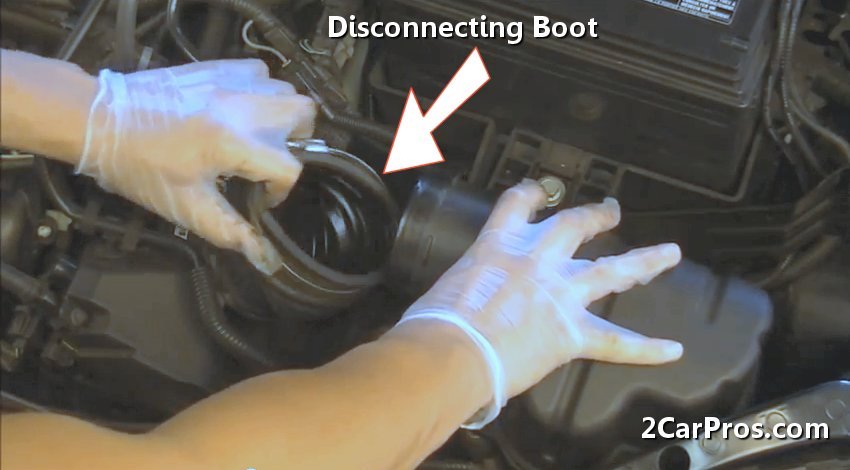
  • Step 5 - Some cars have an air intake boot or tube which is used to transferring the engine's intake air intake. This tube is mounted between the throttle body and the MAF sensor. If your engine does not have a MAF or an intake tube you can skip this test. This tube and boot is subject to engine torque, heat and vibration. If this tube or boot develops a tear or crack it will allow the system to become lean causing a high idle condition. Using a flashlight, inspect the intake tube and boot for any malfunction. Most intake boots will tear inside the pleat so look carefully. If a crack or tear is discovered replace the failed part with a new unit and recheck system.

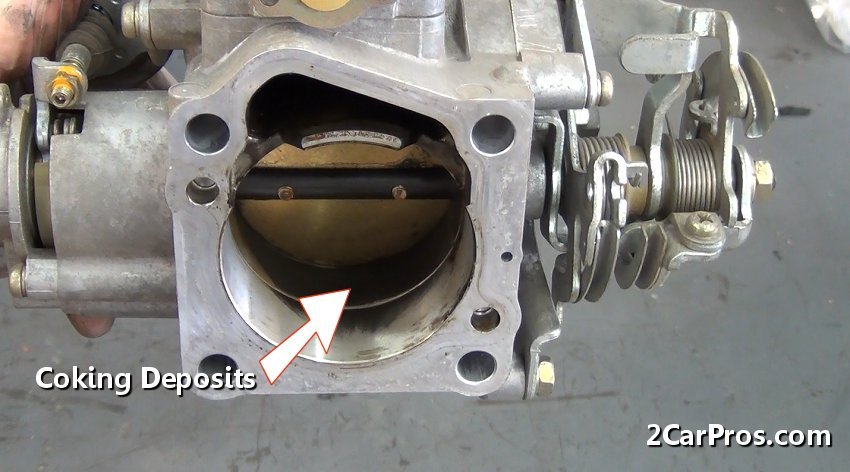
  • Step 6 - The throttle body of your engine controls the secondary air intake for the engine. The throttle body becomes dirty with air contaminants that the air filter cannot keep out. This condition is called "coking" and can cause stalling as well as an elevated engine idle condition. The throttle bore in this illustration has been cleaned for visual purposes. Usually the throttle bore and plate are coated with a dark thin tar that needs to be cleaned. One of the best product to perform this action is any aerosol choke cleaner and a shop towel.


    Cleaning Throttle Body

  • Step 7 - The engine ignition timing for your engine is very important. This timing controls the combustion process and if the timing is too far retarded the engine will idle to slow. To check for this condition use a "timing light" and follow the timing setting procedure for your car. Every engine is different so you will need to consult your under hood sticker or a repair manual to perform this procedure. Note: If the timing is off and if returned the timing marks to specification the engine has no or little power, either the timing dampener has moved due to a keyway issue or the outside ring of the damper had "spun". Also for timing belt style of engines, if the timing belt has jumped a tooth or has been installed incorrectly. The cam to crankshaft correlation timing is incorrect causing low power. Some mechanics will advance the timing to try and make up of this condition. An engine with a timing belt "timing" issue will have elevated emission outputs.

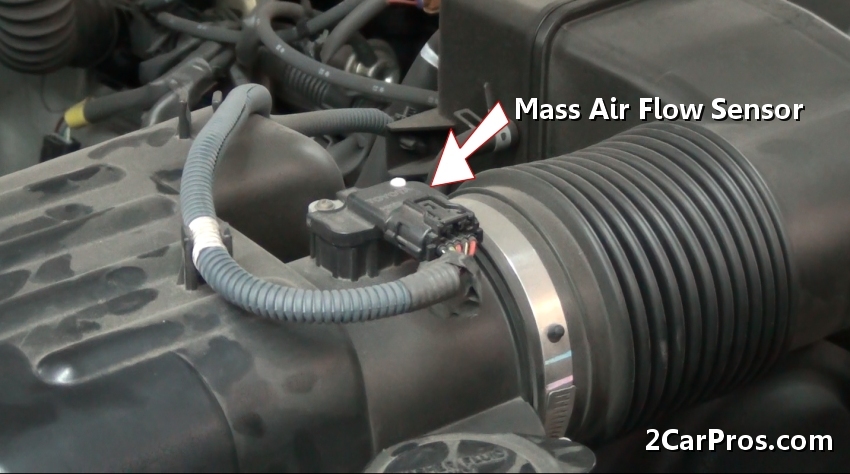
  • Step 8 - The sensors that monitor your car's engine are delicate. If a sensor is malfunctioning intermittently it might not set a trouble code and this is why. Let's say the sensor is failing intermittently about every 2 seconds. The PCM program is not designed to set a trouble code unless the sensor fails at .5 milliseconds or shorter. Now the PCM is collecting data that is false and adjusting accordingly. This false data convinces the ECM to raise the engine idle. Unfortunately it takes a little more detective work to detect these types of sensor problems. Using a multi meter with a zero BOD rate (real time) connect the leads to the sensing wire of the sensor and ground. You will need a car repair manual to perform this test. I can tell you this, the oxygen sensor (02), MAF or MAP and coolant sensors are prone to this type of sensor failure.

  • Step 9 - Most cars are equipped with a power brake booster. This booster is designed to assist the driver by helping add pressure to the brake pedal mechanism. As the driver pushes the brake pedal down the brake booster uses a diaphragm and releases engine vacuum to help apply pressure to the brake system. When this booster fails it can allow an engine vacuum leak causing an elevated engine idle condition. To check for this condition start the engine and allow to idle. Next use needle nose pliers to pinch the vacuum feed hose to the power brake booster. If the engine returns to the normal idle range the brake booster has failed and needs replacement. If the engine idle doesn't change the booster is ok.

  • Step 10 - The intake manifold and throttle body are designed to direct the engine's air intake into the cylinder head intake ports. This manifold and throttle body are bolted together using gaskets, if these gaskets fail engine vacuum can leak causing an elevated engine idle condition. This condition can be easy or difficult to find depending on the location of the gasket failure. Try this; with the engine cold start allow the engine to idle. Next, spray aerosol carburetor cleaner around the gasket area of the intake manifold or throttle body. If the engine speeds up or slows down you have a gasket failure.

For exact specific repair procedures for any of the steps above visit our car repair manual page.

WARNING! Always have the vehicle under inspection on level ground, in park with the emergency brake on. Always wear protective eyewear, gloves and necessary clothing before inspection or work begins. Never crank an engine over when anyone is near the battery or engine. Always have an operational fire extinguisher close by, obey all first aid instructions in the event of an injury. Never stand in front or behind a vehicle when starting or running. When engine is cranked over keep hands and clothing away from rotating components. Anyone with a heart pacemaker should not perform these tests.

Troubleshooting / Why Does My Engine Idle to low?

Additional Resources

Check Manufacturer Specific Low Engine Idle Questions and Answers

Related Subjects

ASK A CAR REPAIR QUESTION - Join our question and answer forum where over 10,000 free auto repair questions are answered every month, after you have completed our free signup you will able to ask a question and receive an answer from one of our many forum members. If you elect to donate any small amount of money we will assign one of our 2CarPros Certified Repair Technicians to answer your question. Questions with donations are answered promptly and 100% of the donation is awarded to the technician helping you.

GET AN ONLINE CAR REPAIR MANUAL - Get instant access to your vehicles wiring diagrams, firing orders, component locator, vacuum diagrams, repair procedures, specific testing and diagnostics for troubleshooting, steering and suspension information, heating and air-conditioning problems, safety belt and airbag restraint repair, factory bulletins and general information and much more. We recommend that anyone needing technical repair information should have a quality auto repair manual for their car.


Popular Service Repairs
Test Fuses
Replace Front Brake Pads
Check Engine Light
Rear Brake Shoes
Rear Brake Pads
Test Alternator
Replace Air Filter
Test Battery
Tune Up
More Service Repairs...
Advertisement
Car Questions
Acura
Alfa Romeo
American Motors
Audi
BMW
Buick
Cadillac
Chevy
Chrysler
Citron
Daewoo
Daihatsu
Dodge
Eagle
Ferrari
Fiat
Ford
Geo
GMC
Honda
Holden
Hummer
Hyundai
Infiniti
International
Isuzu
Jaguar
Jeep
Kia
Land Rover
Lexus
Lincoln
Mazda
Mercedes Benz
MG
Mercury
Mini
Mitsubishi
Nissan
Oldsmobile
Opel
Peugeot
Plymouth
Pontiac
Porsche
Renault
Rolls Royce
Rover
Saab
Saturn
Scion
Seat
Skoda
Subaru
Suzuki
Toyota
Vauxhall
Volkswagen
Volvo

Home l Help l Privacy Policy l User Agreement l About Us l Computer Repair Question l Contact Us l Link to Us l We're Hiring l Affiliate Program
  Copyright © 1999 - 2009 2CarPros.com - Professional Mechanics Online