Discover the essentials of identifying and repairing vacuum leaks in your vehicle's engine with this comprehensive guide. Improve your car's performance and fuel efficiency by tackling this common automotive issue.
Introduction to Engine Vacuum Leaks
An engine vacuum leak can be a puzzling issue affecting your vehicle's performance and can cause a check engine light for lean mixture codes. A vacuum leak occurs when air enters the engine through a crack or gap in the vacuum hoses, intake manifold gasket, or other components. This unmeasured air disrupts the engine's air-fuel balance, leading to a range of performance problems including stalling at idle. Engine vacuum is a large factor in the equation of the fuel management system which is determined by the engine computer. Most internal combustion engine's hold between 15 and 18 inches of vacuum when idling, this condition varies as the engine is under load, the amount of vacuum is measured by a combination of various sensors such as mass air flow (MAF), throttle position (TPS) or a manifold absolute pressure (MAP) sensor.
Symptoms
With improper vacuum the engine is forced to run in an unstable environment which can cause a check engine light, low idle, high idle, poor acceleration, cylinder misfires and stalling at idle. Additional vacuum leak side effects can include weak power brakes, EVAP system problems and HVAC blend door actuator issues. Here is more information on symptoms.
SPONSORED LINKS
Let's Jump In!
Lift the hood and inspect the
vacuum hoses (engine off) to look for obvious cracks or breakage, be sure to inspect
the PCV and EVAP systems as well.
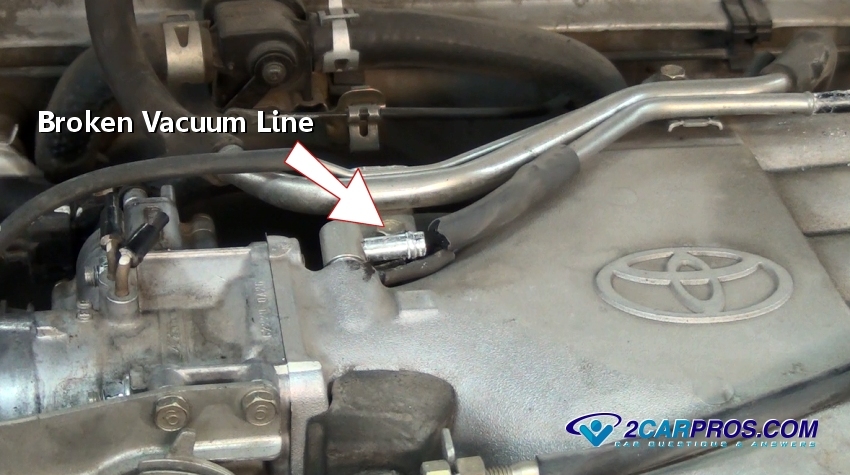
If a broken or dilapidated vacuum line is found remove the hose to replace the
line with a new hose which you can get at any auto parts store, take the old hose
with you to get the correct size.
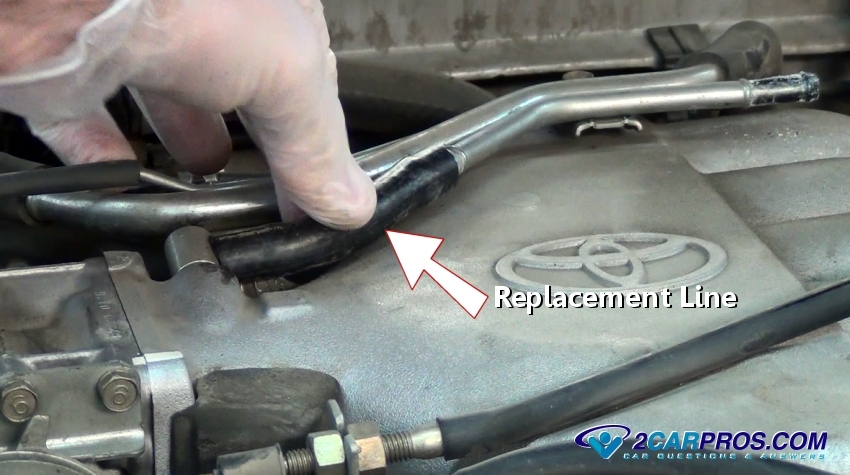
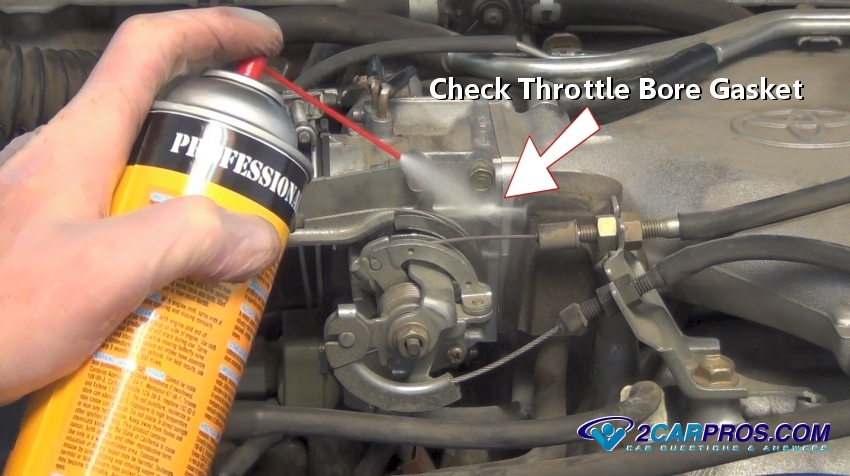
If after inspection no visible problems are found a hose could have a problem
that is unseen or there is an intake or throttle body gasket failure which can be
found using carburetor cleaner or WD40, keep in mind these are flammable so do not
spray the exhaust manifolds or ignition system. Start with the engine cool and if
the engine is stalling at idle have a helper
hold the throttle down slightly to keep the engine running steady. To aid in the
discovery of a vacuum leak an audible hiss or whistle sound might be heard which
will help pinpoint the problem. There are alternative methods which involve using
a smoke machine which is attached to a vacuum hose on the engine. Smoke is then
pumped into the engine's intake where it can be detected at the leak, the following
instruction is a cheaper alternative to purchasing a smoke machine.

With the engine running spray the cleaner near and around the throttle bore,
air intake tube and vacuum hoses, if the engine picks up idle speed or starts to
run smooth the cleaner is being burned and you have found the leak.
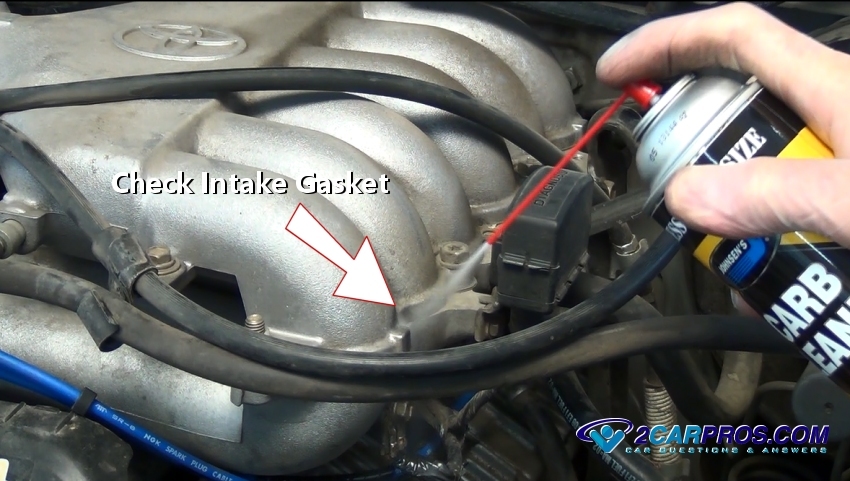
Continue testing by spraying around the intake manifold plenum and base gaskets
while observing engine speed, if the gasket has failed the engine speed will increase.
SPONSORED LINKS
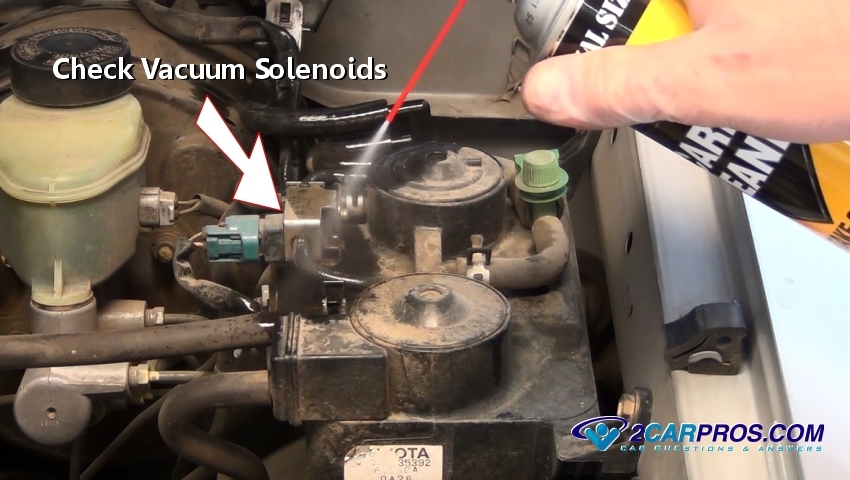
Move on to external components such as EVAP control solenoids and vacuum lines
connections while observing engine speed.
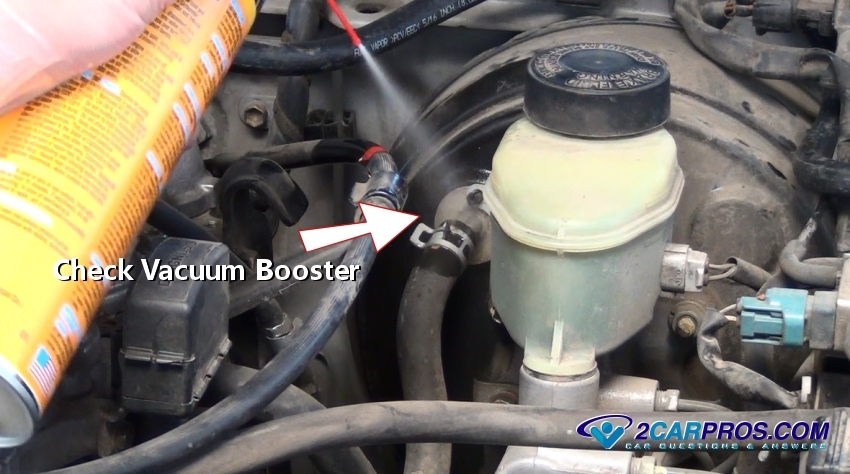
A large amount of vacuum is supplied to the brake booster which can allow major
leaks, spray around the booster while observing engine speed. Also, an audible hissing
noise can sometimes be heard coming from inside the vehicle above the brake pedal
which indicates the booster has failed. An alternative method of a vacuum leak inspection
is to gently pinch a supply line to the accessory and observe engine speed, an increase
indicates a leak.
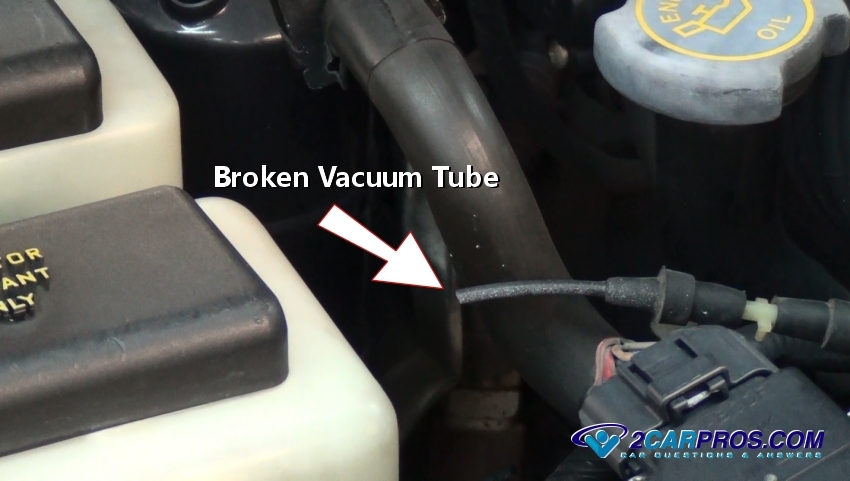
Check small vacuum tubes for cracks and broken pieces, these tubes provide vacuum
to many accessories such as the heater/air conditioner, leaks under the dashboard
or near the heater plenum can also occur.
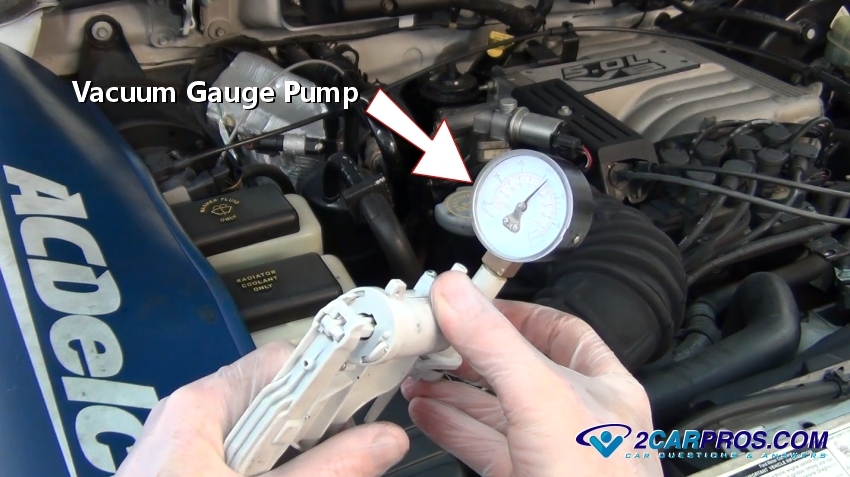
A vacuum tester can be used to check items such as a MAP sensor, EGR valve, vacuum
canister, brake booster or a HVAC blend door actuator. Disconnect the line from
the accessory and connect it to the tester, pump the tester and observe the vacuum,
the gauge will raise and should hold steady if the accessory is okay.
When using a scan tool checking the fuel trim can indicate a vacuum leak, the fuel trim should be at about + or - 5, if its above 7 you can suspect a leak.
SPONSORED LINKS
If a vacuum leak is still suspected remove the oil fill cap with the engine running, place your hand over the oil cap opening, if you can feel vacuum when you remove your hand chances are the intake gasket has failed and is leaking internally.
Watch the Video!
Please watch this video of the job being done to glean additional helpful information.
Credits
Guide knowledge base was created by the 2CarPros Team, overseen by Ken Lavacot: Automobile repair shop owner and certified master automobile technician of over 30 years.
If you have question or need help please ask one of our experts we are happy to help. Please visit our 2CarPros YouTube Channel.
Article published 2024-03-08
SPONSORED LINKS